
The Ultimate Guide to Choosing an Emergency Towing Service in Texas
Safety First: Pull Over and Stay Visible
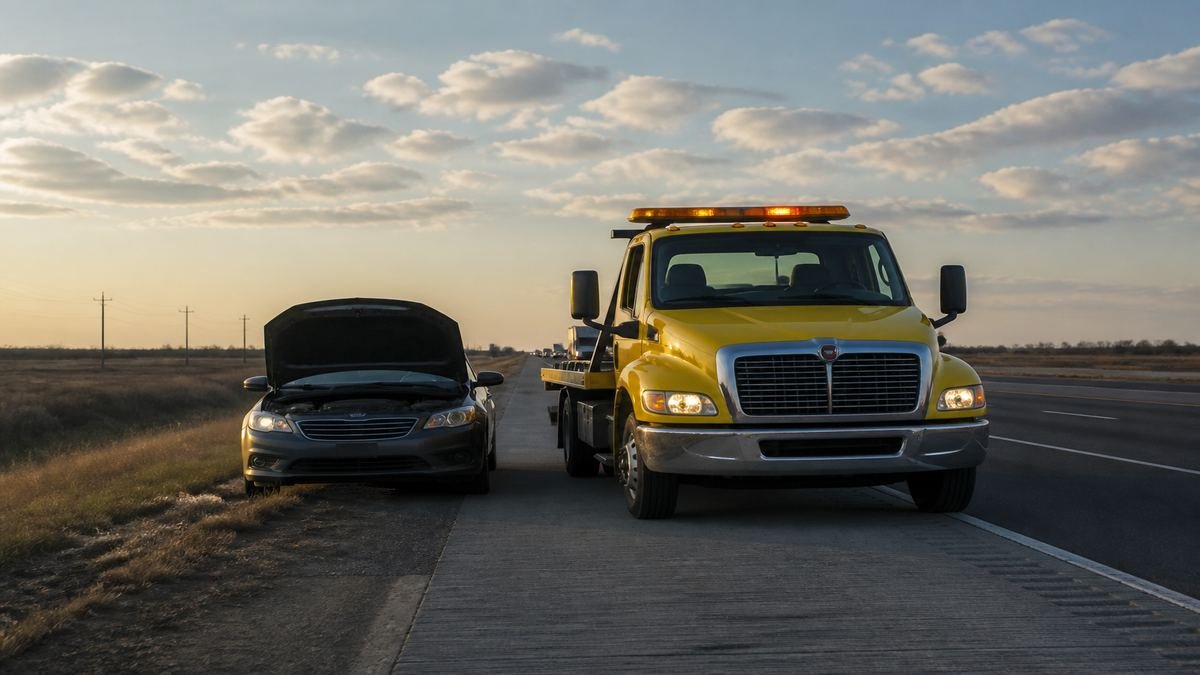
Before you even think about calling a tow truck, your primary concern must be safety. If you suffer a blowout or engine failure, pull as far onto the shoulder as possible. Turn on your hazard lights immediately. If you are on a high-speed interstate like I-10 or I-35, it is usually safer to remain inside your vehicle with your seatbelt fastened.
Beware of "Bandit" Tow Trucks
In major Texas cities, you might encounter "bandit" tow trucks—drivers who monitor police scanners and show up uninvited to an accident scene. They often charge exorbitant, unregulated fees. Always verify that the tow truck arriving is the one you explicitly called. Reputable companies dispatch drivers who will know your name and your exact destination.
Check for Licensing and Insurance
A legitimate towing company in Texas must be licensed by the Texas Department of Licensing and Regulation (TDLR). Look for their TDLR number on the side of the truck. If you need a towing service in Dallas, for example, a verified provider ensures your vehicle is insured while in transit.
Understand the Pricing Structure
Before the hookup begins, ask for a clear breakdown of costs. Most towing services charge a "hookup fee" plus a per-mile charge. Ask if there are extra fees for after-hours service, winching (if you are stuck in mud or a ditch), or special dollies needed for all-wheel-drive vehicles.
Ask About Flatbed vs. Wheel-Lift Towing
If you drive an AWD, 4WD, or a low-clearance luxury vehicle, you absolutely must request a flatbed tow truck to prevent severe transmission damage. Wheel-lift tow trucks are generally safe only for standard 2WD vehicles being towed a short distance.
Frequently Asked Questions
A: It depends on your policy. Many comprehensive policies include roadside assistance, but you may need to pay out-of-pocket first and submit a receipt for reimbursement.
A: Most drivers allow 1-2 passengers to ride in the cab, but it is entirely at the driver's discretion based on safety policies and available seatbelts.
Common towing problems in Texas homes
If you're reading this you probably ran into one of the situations below — these five buckets cover roughly 70–80% of the towing calls dispatched across Houston, Dallas, Austin, and San Antonio each week. Each item includes the actual fix and honest cost range, not marketing fluff.
Won't start, clicking sound when turning the key
Dead battery or corroded terminals. Jump start $65-120 on-site; if the battery won't hold a jump, tow to a shop or auto parts store $110-220 for the tow.
Flat tire on the freeway shoulder
Do NOT try to change on a live shoulder. Move as far right as possible, hazards on, exit the vehicle on the non-traffic side. Roadside change $65-130 if you have a spare; tow to a tire shop if not.
Ran out of gas
Fuel delivery $75-140 for 2-3 gallons plus fuel cost. Faster than getting a ride to and from a station in most metros.
Fender-bender in a parking lot, car still drivable
Even minor accidents often reveal alignment or radiator damage that gets worse if you drive it. Tow to a body shop $110-220. Get the report from the incident first.
Stuck in mud, ditch, or high curb
Winch-out service — either a heavy-duty wrecker with a boom, or a truck with a winch reel. $150-350 depending on how stuck and access. If any structural damage suspected, get a flatbed after the winch-out.
Honest towing pricing in Texas (2024–2025)
Ranges below are collected from independent, licensed Texas contractors — not a franchise call center. Every dispatched job gets a written estimate before work starts, so you always know the number before you approve.
| Scope | Typical range |
|---|---|
| Hook-up / base fee (light-duty) | $75 – $150 |
| Per-mile tow rate | $3.50 – $7.00 per loaded mile |
| After-hours / weekend surcharge | $25 – $75 on top of base |
| Winch-out (stuck vehicle, no damage) | $100 – $300 |
| Accident recovery (per hour) | $150 – $325 per hour |
| Jump start | $65 – $120 |
Prices exclude sales tax. After-hours (9pm–7am) and weekend calls typically add $25–75 depending on trade.
What to expect when the tech arrives
Every dispatched contractor follows the same clean process regardless of which Texas metro you're in. This is what a normal on-site visit looks like:
- Truck arrives; driver confirms vehicle and destination.
- Assesses damage/drivability, chooses flatbed vs wheel-lift.
- Straps down and lifts safely; secures all four corners.
- Provides written invoice with tow rate, mileage, and any surcharges.
- Delivers to destination and unloads safely.
Seasonal notes for Texas towing
Winter cold triggers dead-battery spikes (batteries lose ~20% capacity below 32°F). Summer heat kills batteries too — 90+°F engine bays cook them faster than cold. Get your battery load-tested twice a year (spring + fall).
Warranty & materials
Tow itself doesn't carry a warranty — you either delivered undamaged or you file a claim. All reputable tow operators carry on-hook insurance covering damage in transit. Ask for the policy declaration if towing a high-value vehicle. Never sign a 'released from liability' waiver.
Frequently asked
How long will a tow truck take to arrive in your Texas city?
Realistic ranges: on-freeway breakdowns in the metro get priority — typically 25–50 minutes. Parking-lot pickups and less-urgent situations can be 45–90 minutes, longer at night or in weather. If you're in a live traffic lane, tell the dispatcher immediately — that changes the response priority.
How much does a tow cost in your Texas city?
Straightforward light-duty tow: $75–150 hook-up plus $3.50–7 per loaded mile. A typical 10-mile metro tow totals $110–220. Accident recovery, winching, or medium/heavy-duty jobs are hourly rates and quoted before dispatch.
Do you accept insurance / roadside memberships?
Some tow operators direct-bill AAA, Better World Club, and manufacturer roadside programs (Toyota, Honda, Ford Roadside). Most auto insurance policies with roadside include a per-tow reimbursement — you pay the tow op and file for reimbursement. Confirm coverage before dispatch.
Will a tow damage my car?
Not when done correctly. Flatbeds (rollbacks) are the safest option — all four wheels off the ground — and required for AWD, 4WD, and low-clearance vehicles. Wheel-lift dollies work for standard FWD or RWD but not for all-wheel-drive systems without additional dolly hardware.
Where Texaserv dispatches towing in Texas
Every job routes to a licensed contractor already working in the metro. Click through for the local pricing, response bands, and licensed contractor details:
